
AI Customer Support Deflection Rates: What’s Real in 2026
Every AI customer support vendor publishes a deflection rate, and they range from 30 percent to 80 percent, sometimes higher.

What Deflection Rate Is Supposed to Mean
The cleanest definition: of all inbound support inquiries the AI saw, what percentage were resolved without ever reaching a human, with the customer indicating they were satisfied. Three pieces matter, and most vendors omit at least one.
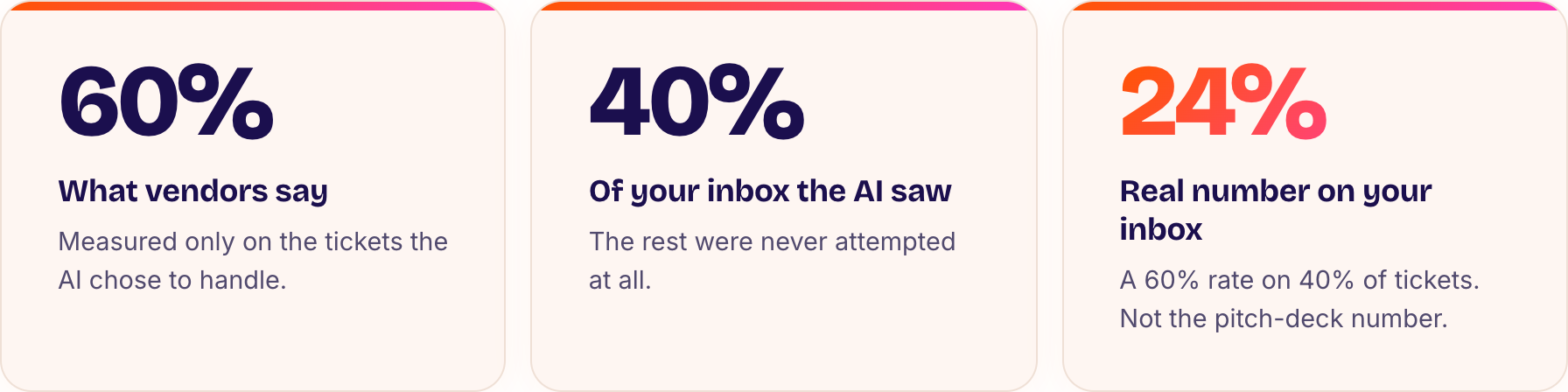
“All inbound inquiries” is the denominator. Some vendors quietly exclude inquiries the AI did not even attempt. A 60 percent deflection rate on the 40 percent of tickets the AI bothered to look at is a 24 percent rate on your actual inbox.
“Resolved” is the numerator. A customer who got a non-answer and gave up is technically deflected. A customer who got the right answer and confirmed it is resolved. The two should not be one number.
“With customer satisfaction” is the qualifier. A deflection that hurts CSAT is a hidden cost on the cost-savings line.
Why Published Deflection Rates Don’t Compare
Richpanel publishes 40 to 60 percent of typical ecommerce queries resolved by self-service, as a category benchmark. Gartner projects self-service becoming the norm for retail by 2030, which is directional. Various Shopify case studies cite 50 to 70 percent resolution, usually cherry-picked and narrow-workflow. Premium CX vendors like Gladly have reframed around “resolution” rather than “deflection,” implicitly conceding the deflection metric is unhelpful. None of these are apples-to-apples.
Realistic Benchmarks by Workflow
Instead of one headline number, here are realistic ranges when an AI agent is well-deployed. Narrow-scope, structured-data workflows outperform complaint handling by 3–5×.
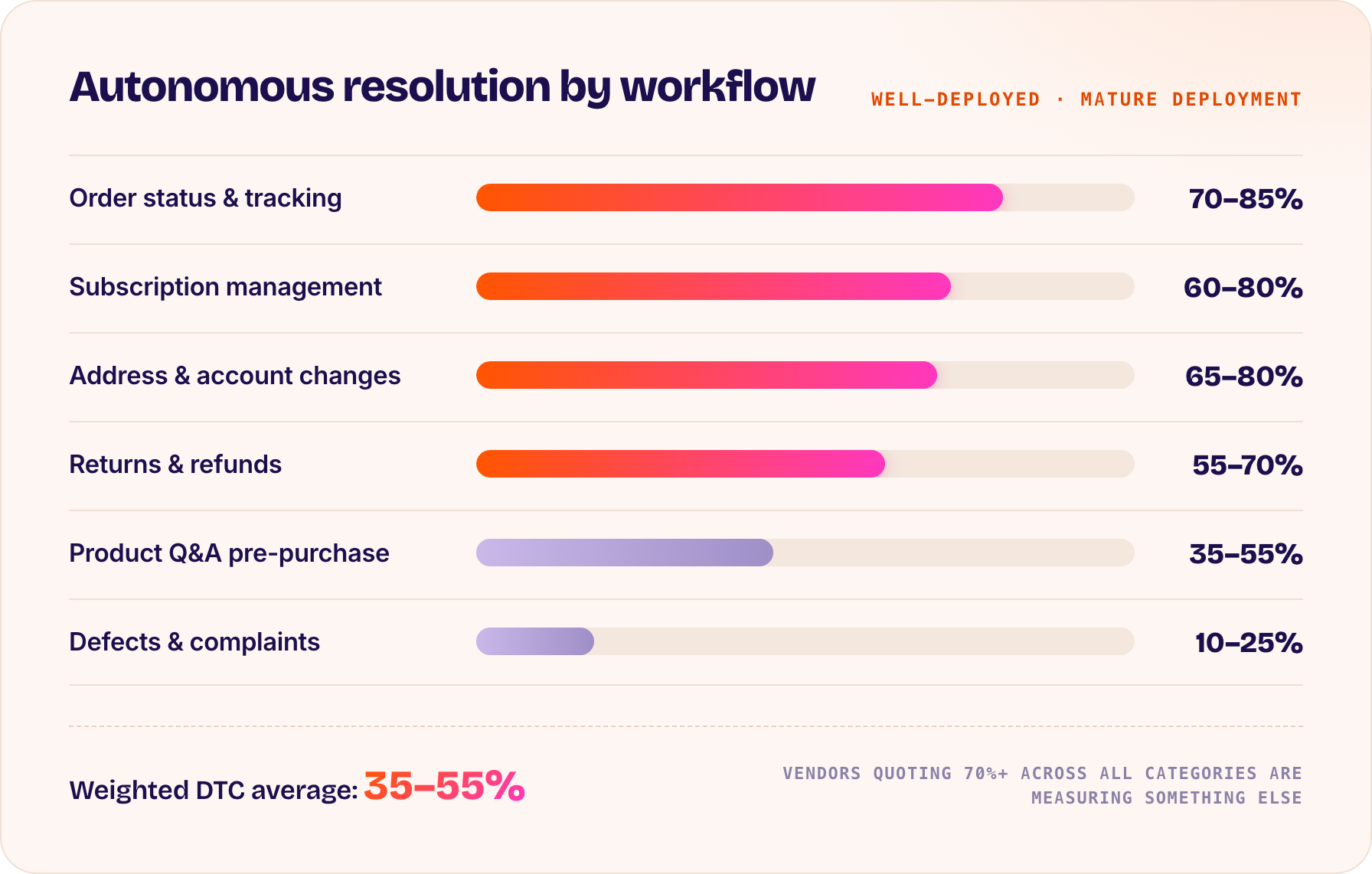
Weighted across all categories for a typical DTC ecommerce store, expect 35 to 55 percent true autonomous resolution. That is the honest number. Vendors quoting more than 70 percent across the board are measuring something else.
Why Your Number Will Be Lower Than the Case Study
Five reasons most stores underperform in the first 90 days: knowledge base gaps (the AI doesn’t know what you didn’t write down); policy ambiguity (“sometimes we make exceptions” isn’t executable); channel coverage gaps (email-only shows worse numbers than email + chat + self-service); Customer Groups not respected (B2B and VIP customers slipping into retail workflows tank CSAT); and the first 30 days are noise (rates rise sharply as the agent learns edge cases).
How to Measure Your Own Number Honestly
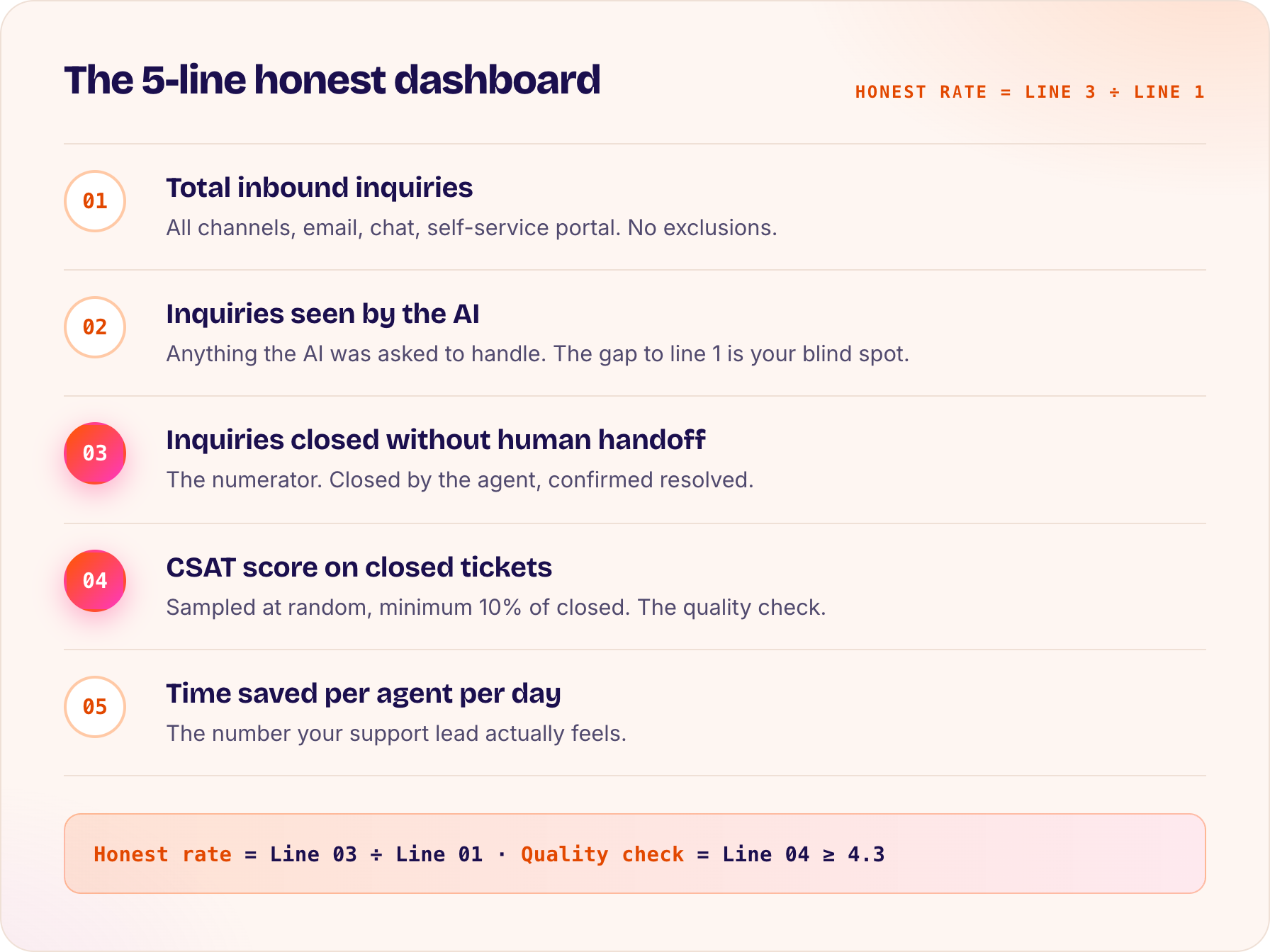
Five lines on a dashboard. The honest deflection rate is line 3 divided by line 1, with line 4 as the quality check. Anything else is theater.
What to Ask Vendors
Four questions quickly separate the serious platforms from the marketing-led ones.
What Changes When the AI Sees More Data
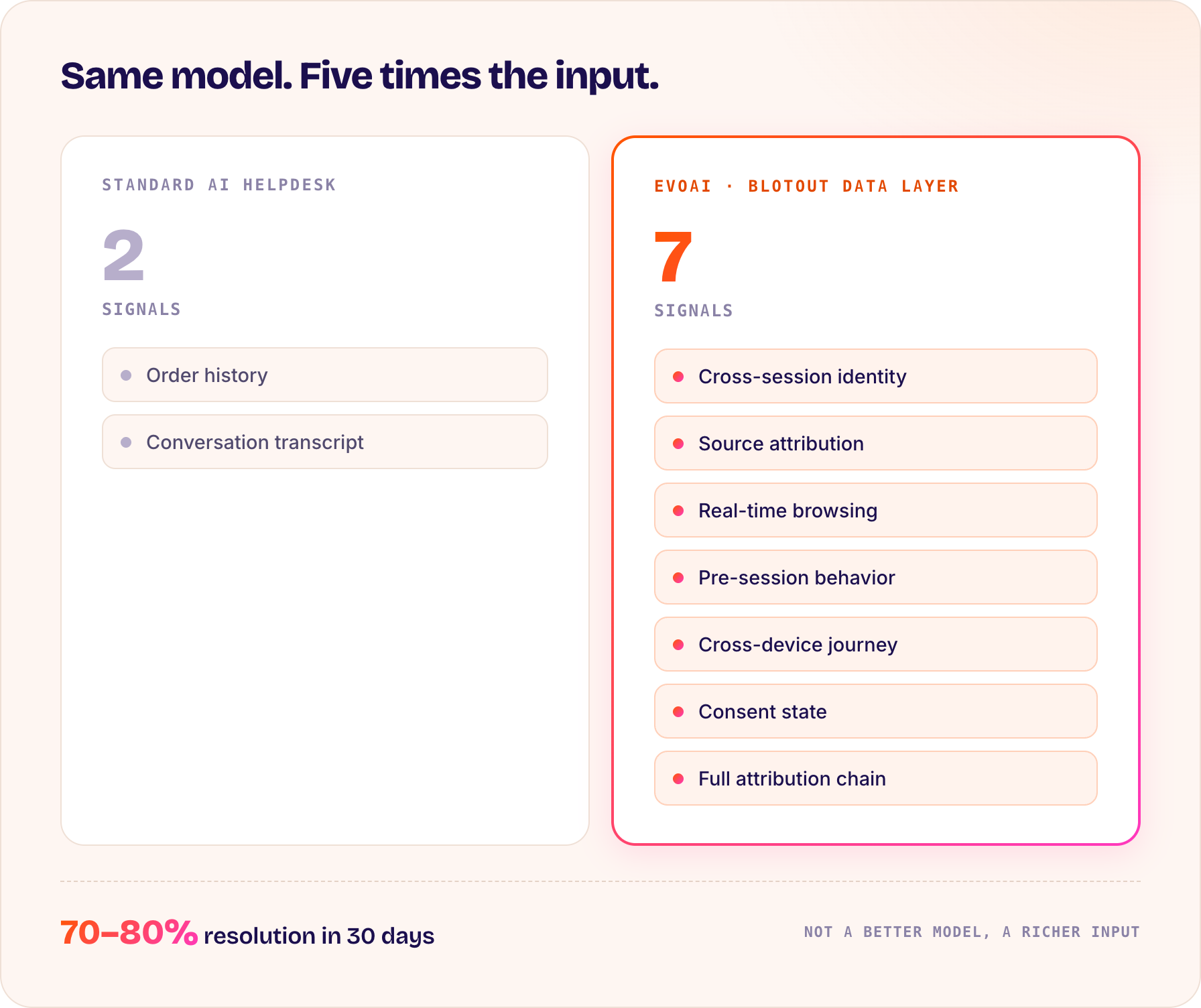
The 35 to 55 percent range assumes the AI is working with order history and conversation transcript alone. EvoAI runs on Blotout’s first-party data layer, which gives the AI seven signal categories before the first message: cross-session identity, source attribution, real-time browsing, pre-session behavior, cross-device journey, consent state, and full attribution chain. The result is 70 to 80 percent autonomous resolution within 30 days across 200-plus deployments at 4.8 average CSAT. Not because the model is better, but because the input is richer.

A Practical First Target
For a typical DTC ecommerce store deploying AI customer support for the first time, a realistic 90-day target is 35 to 45 percent autonomous resolution at CSAT 4.3 or higher. That is the band where the math starts working without compromising the customer experience.
If your vendor promises 70 percent in week one, ask for a refund clause tied to that number. The honest ones will agree. The rest will move the goalposts.
Frequently Asked Questions
1) What is a good ticket deflection rate?
For a typical DTC store, 35 to 55 percent true autonomous resolution across all workflows is realistic and healthy. Single workflows like order status can reach 70 to 85 percent.
2) What’s the difference between deflection and resolution?
Deflection means the ticket did not reach a human. Resolution means the customer’s problem was actually solved with satisfaction. A high deflection rate with low CSAT is a warning sign.
3) Why do vendor deflection rates vary so much?
Because the metric is not standardized. Vendors use different denominators, channels, and time windows, and some exclude tickets the AI never attempted.
4) How do I calculate my deflection rate?
Divide tickets closed without human handoff by total inbound inquiries across all channels, then check CSAT on the closed tickets to confirm they were genuinely resolved.
See Evo in action, running on your store
Book a 30-minute walk-through to see how Evo fits on your actual catalog, your support tickets, and your real search queries — and see your real customer graph in action