
Cost Per Resolution: The CX Metric Your CFO Will Ask About Next
Cost per resolution is the fully loaded cost to close one customer issue with a confirmed outcome, including labor, tooling, and any per-resolution AI fees.

Cost per resolution is the fully loaded cost to close one customer issue with a confirmed outcome, including labor, tooling, and any per-resolution AI fees. Industry samples put AI-assisted resolutions near $0.62 versus about $7.40 for a human agent, but the number only holds if the AI actually resolves rather than deflects.
What cost per resolution is and how to calculate it
Cost per resolution is the total cost to close one customer issue end to end, divided by the number of confirmed resolutions in a period. To calculate it, add your fully loaded support costs for the period (team salaries and overhead, software, and any per-resolution AI fees), then divide by the tickets that closed with a confirmed outcome.
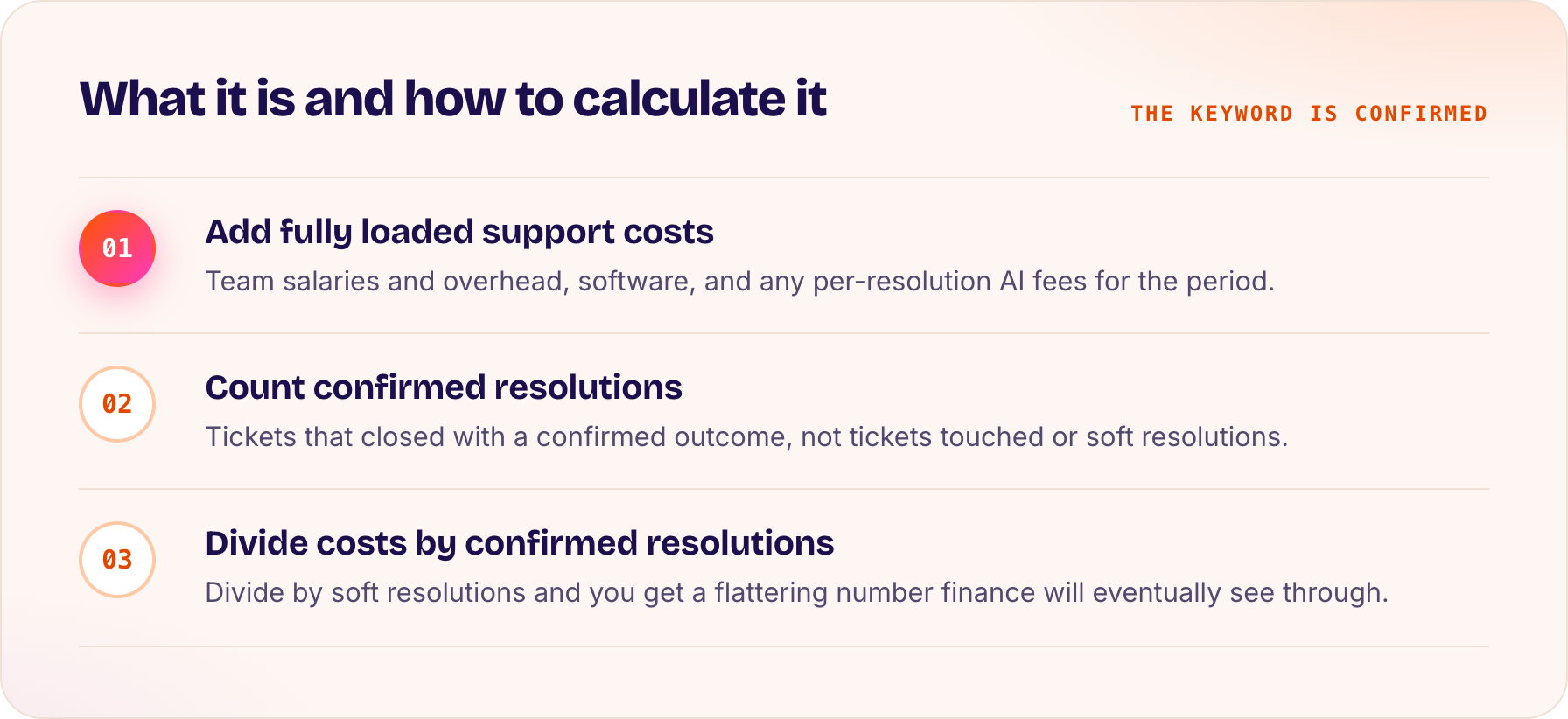
The keyword is confirmed. If you divide by soft resolutions that did not actually solve anything, you get a flattering number that finance will eventually see through.
Why it beats ticket volume as a CX-to-finance metric
Ticket volume tells you how busy you are. Cost per resolution tells you how efficiently you turn problems into solutions, in money. That is the language finance speaks. It reframes support from a cost center you defend into a margin lever you improve, which is exactly why your CFO is starting to ask for it.
The AI vs human math (and the deflection asterisk)
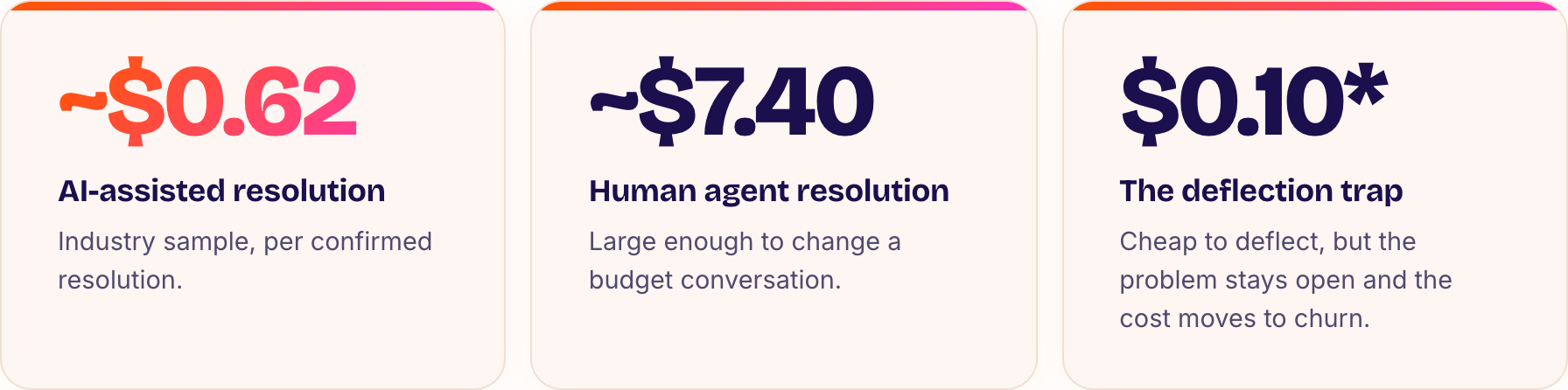
Industry samples put an AI-assisted resolution near $0.62 versus roughly $7.40 for a human agent. That gap is large enough to change a budget conversation. The asterisk is that the AI number only holds if the AI actually resolves. An AI that deflects at $0.10 but leaves the problem open is not cheaper, it just moves the cost to churn and to the human who cleans it up later.
How per-resolution vendor pricing changes the equation
If your vendor charges per resolution, their definition of a resolution is now a line item in your cost per resolution. A loose definition inflates both the vendor reported success and your bill. Read the definition before you model the math, or you will understate your true cost.
A simple worksheet to price your queue
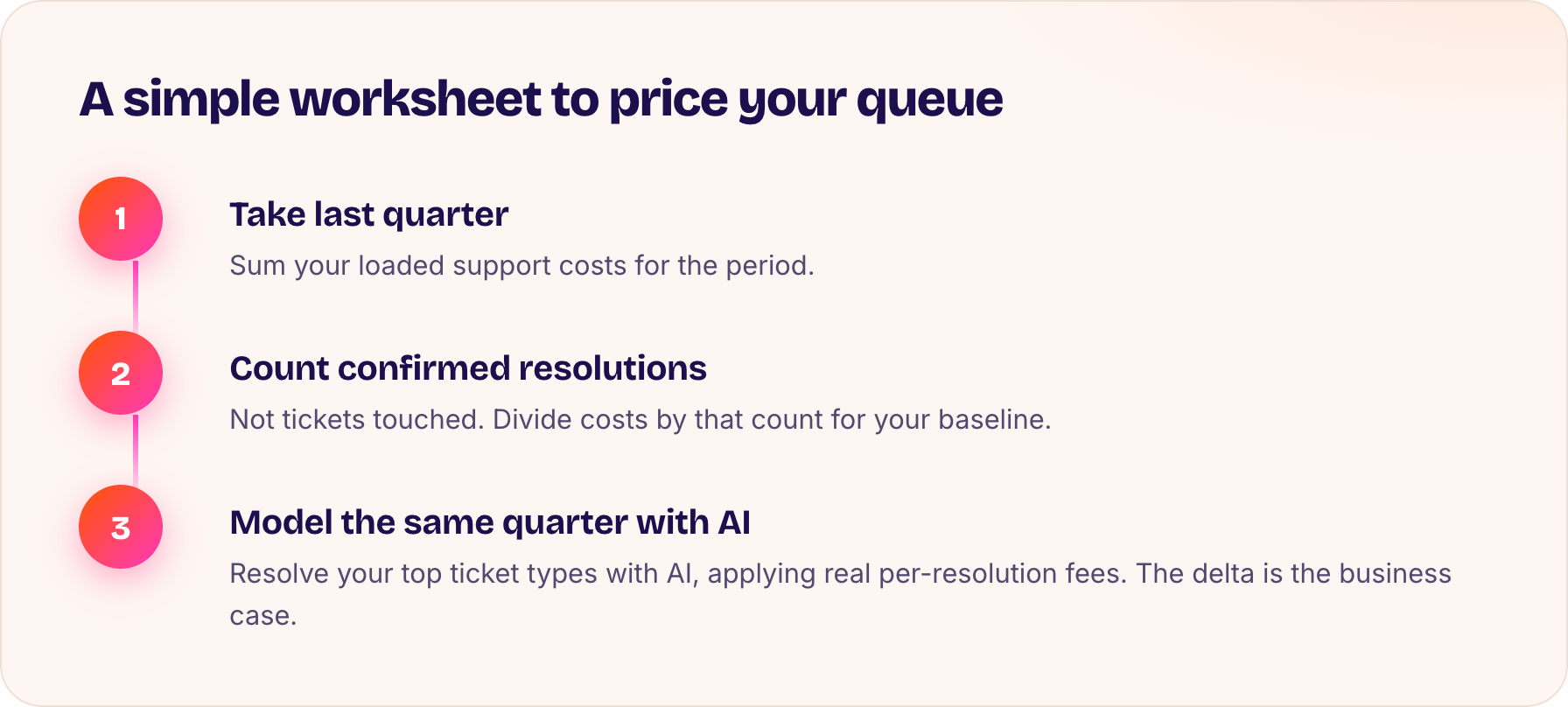
Take last quarter. Sum loaded support costs. Count confirmed resolutions, not tickets touched. Divide. Then model the same quarter with your top ticket types resolved by AI, applying real per-resolution fees. The delta between the two is the business case, and it is far more persuasive than any vendor benchmark.
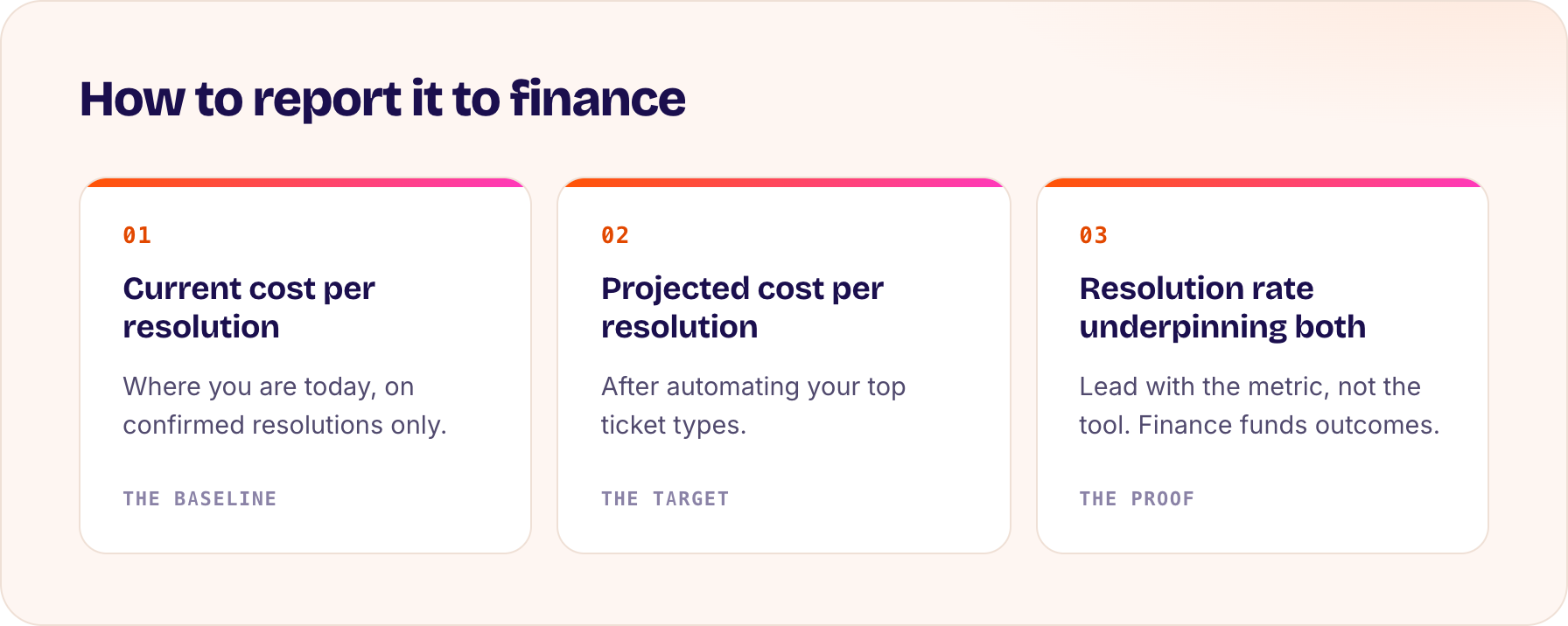
How to report it to finance
Bring three numbers to the quarterly review: current cost per resolution, projected cost per resolution after automating your top ticket types, and the resolution rate that underpins both. Lead with the metric, not the tool. Finance funds outcomes, not features.
Frequently asked questions
1) What is cost per resolution?
It is the total cost to resolve one customer issue end to end, including team time, software, and any per-resolution AI fees, divided by the number of confirmed resolutions.
2) How do you calculate cost per resolution?
Add fully loaded support costs for a period (labor, tooling, AI fees) and divide by the number of tickets closed with a confirmed outcome in that period.
3) What is a good cost per resolution?
It varies by category, but AI-assisted resolutions can run under a dollar versus several dollars for human handling, provided the AI actually resolves rather than just deflecting.
See Evo in action, running on your store
Book a 30-minute walk-through to see how Evo fits on your actual catalog, your support tickets, and your real search queries — and see your real customer graph in action