
Customer Service Automation for Ecommerce: The 2026 Playbook
Customer service automation uses AI to handle repetitive support tasks like order status, returns, and refunds without a human, ideally by resolving them end to end rather than deflecting them to a help center.


Customer service automation uses AI to handle repetitive support tasks like order status, returns, and refunds without a human, ideally by resolving them end to end rather than deflecting them to a help center. For ecommerce, start with your highest-volume ticket types, measure resolution rate rather than deflection, and track cost per resolved ticket.
What customer service automation means in 2026
Customer service automation is the use of AI and workflows to handle repetitive support tasks without a human. In 2026 the bar has moved. It is no longer enough to auto-reply or route a ticket. The tools that matter now resolve the request end to end, from understanding the intent to taking the action and confirming the outcome.
The distinction that decides your return on investment is whether the automation resolves or merely deflects. Everything else in this playbook follows from that.
Deflection vs resolution: the distinction that decides ROI
Deflection counts tickets kept away from a human. Resolution counts problems actually solved. You can post a great deflection rate while customers sit with unsolved issues, and the cost of that shows up later as churn, chargebacks, and bad reviews.
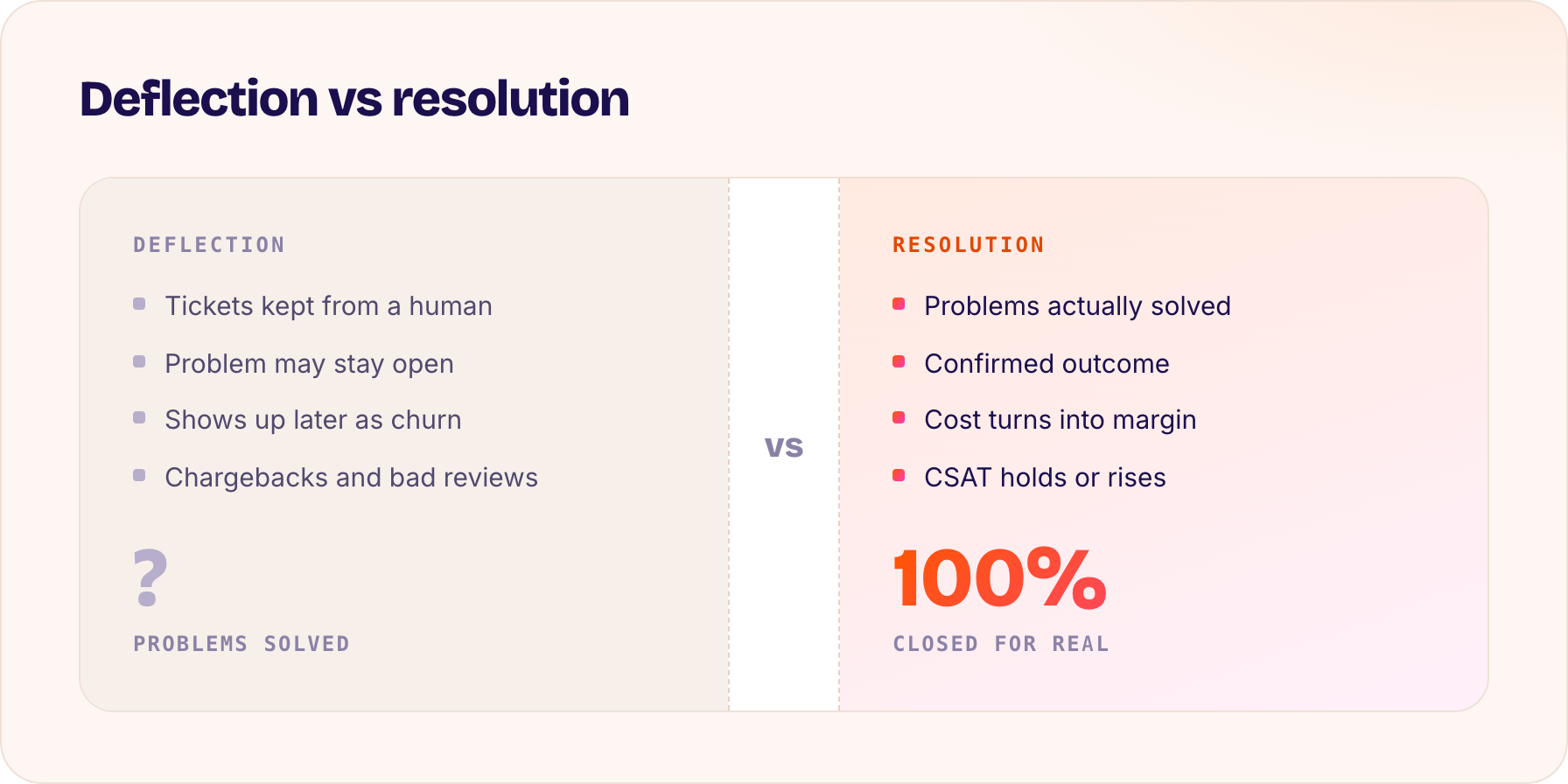
Track both. When deflection climbs but resolution does not, your automation is hiding tickets rather than closing them, and that is a warning sign, not a win.
What to automate first in ecommerce
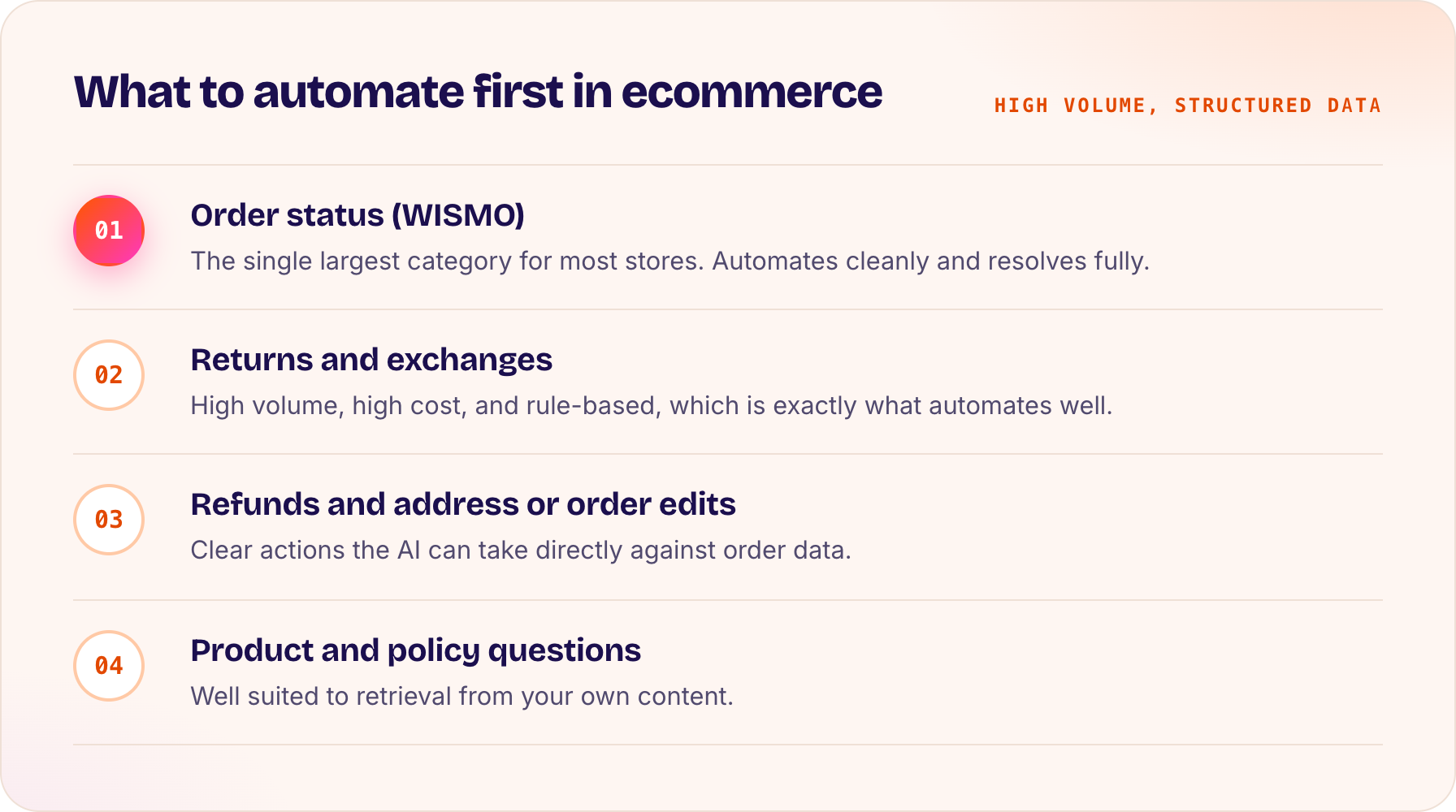
Start where volume is high and the data is structured, because those tickets automate cleanly and resolve fully.
Build vs buy vs agent-native
Building in-house gives control but rarely pays off against dedicated tools. Buying a bolted-on assistant gets you drafting help fast. An agent-native platform is the option that actually removes tickets, because it is designed around the AI taking action rather than helping a human type. Match the choice to whether your goal is speed for agents or fewer tickets overall.
How to measure it: resolution rate and cost per resolution
Two metrics keep you honest. Resolution rate is the share of tickets closed with a confirmed outcome and no human. Cost per resolution is the fully loaded cost to close one issue, including labor, tooling, and any per-resolution fees. Industry samples put AI-assisted resolutions near $0.62 versus about $7.40 for a human, but only when the AI actually resolves.
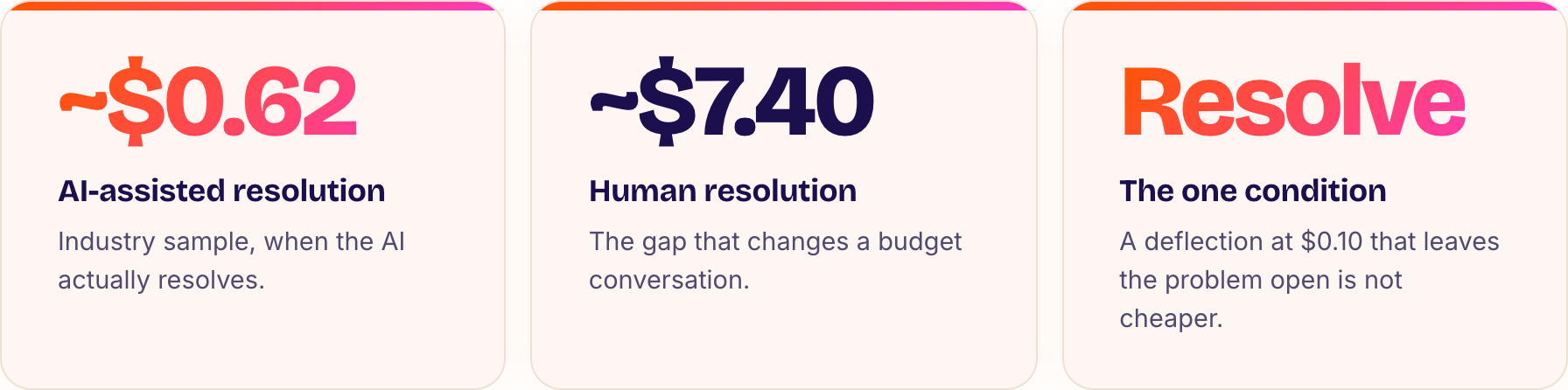
Report cost per resolution to finance instead of ticket volume. It is the number that translates support into margin.
A 90-day rollout plan
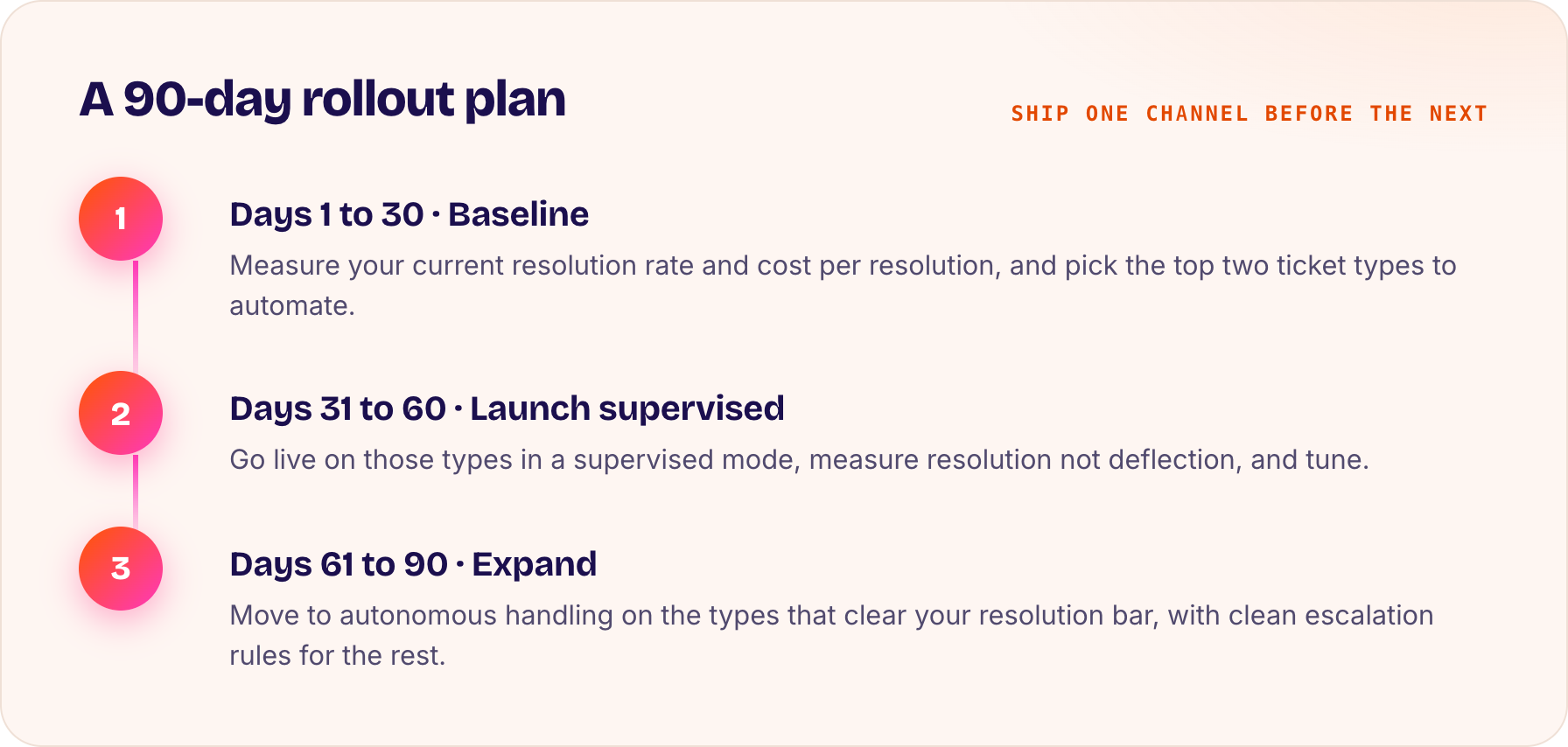
Days 1 to 30: baseline your current resolution rate and cost per resolution, and pick the top two ticket types to automate. Days 31 to 60: launch on those types in a supervised mode, measure resolution not deflection, and tune. Days 61 to 90: expand to autonomous handling on the types that clear your resolution bar, and set clean escalation rules for everything else. Ship one channel completely before starting the next.
Frequently asked questions
1) What is customer service automation?
It is using AI and workflows to handle repetitive support tasks without a human, from answering order-status questions to processing returns, so teams focus on complex, high-value cases.
2) What should ecommerce brands automate first?
Start with your highest-volume, most repetitive tickets: order status (WISMO), returns, refunds, and address changes, which are well defined and data-rich.
3) Does automation hurt customer experience?
Only when it deflects instead of resolves. Automation that closes the problem end to end, with clean escalation for edge cases, tends to improve both speed and satisfaction.
See Evo in action, running on your store
Book a 30-minute walk-through to see how Evo fits on your actual catalog, your support tickets, and your real search queries — and see your real customer graph in action