
Ecommerce Returns Automation: The 2026 Guide (Including the EU Right of Withdrawal)
Ecommerce returns automation uses AI to handle a return request end to end: confirming eligibility, issuing the label, and processing the refund or exchange.

Ecommerce returns automation uses AI to handle a return request end to end: confirming eligibility, issuing the label, and processing the refund or exchange, ideally in the customer language and inside any legal window. It matters because a return costs roughly $25 to $35 to process, and in the EU the right of withdrawal makes returns a non-deflectable legal obligation.
Why returns are the most expensive, most automatable queue
Returns are a paradox. A single return costs roughly $25 to $35 to process once you count shipping, labor, inspection, and restocking, which makes it one of your priciest support categories. Yet the questions are repetitive and the data is structured, which makes it one of your most automatable. That combination is exactly where end-to-end resolution pays off fastest.
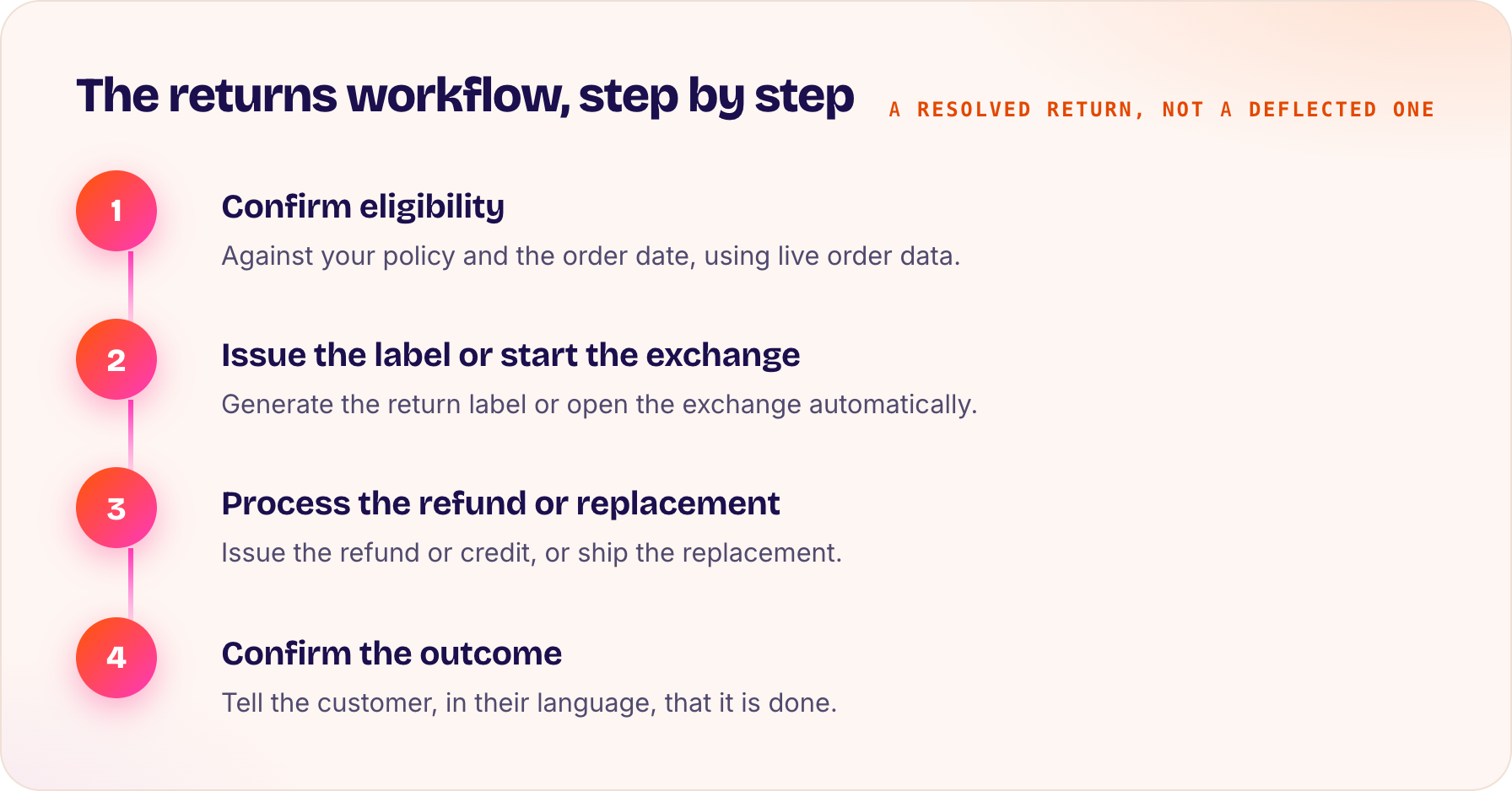
The returns workflow, step by step
A resolved return, not a deflected one, runs through four steps that AI can own with access to order data.
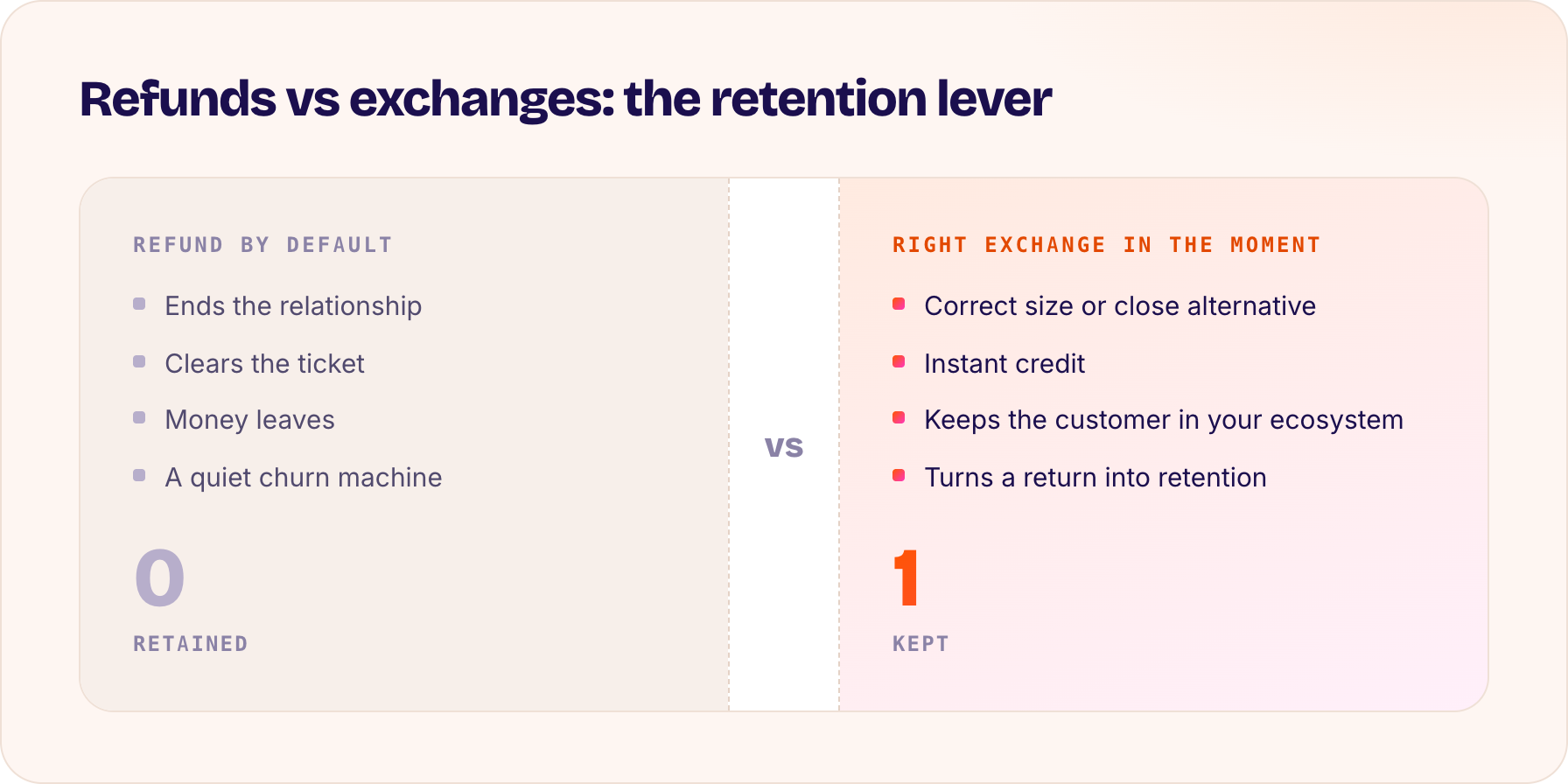
Refunds vs exchanges: the retention lever
A refund ends the relationship. An exchange keeps the customer in your ecosystem. The agent that surfaces the right exchange in the moment, the correct size or a close alternative with instant credit, turns a return into retention. Treating every return as a refund to clear is a quiet churn machine.
The EU right of withdrawal
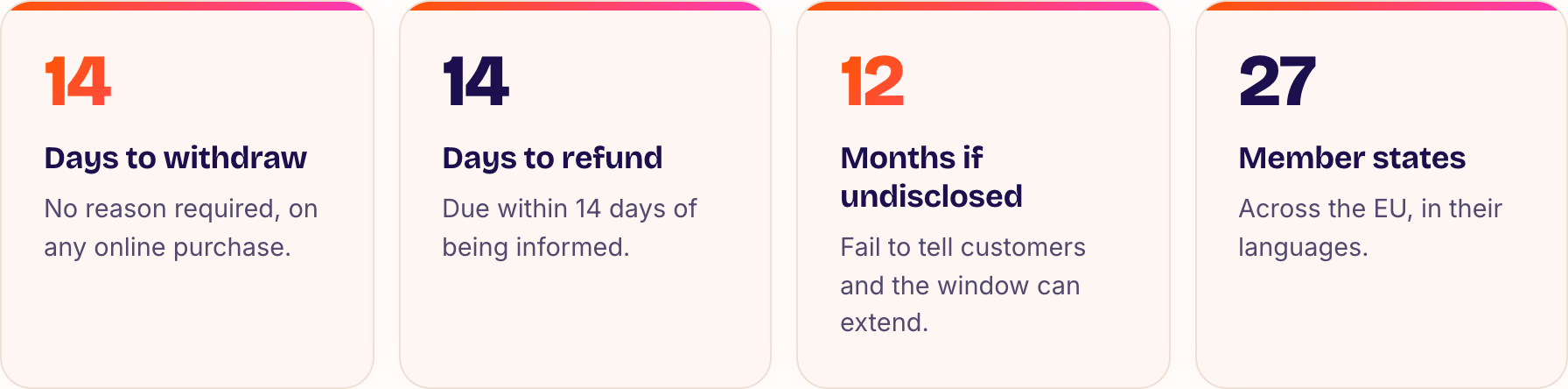
If you sell into the EU, returns are not just a policy, they are the law. Under the Consumer Rights Directive, shoppers get 14 days to withdraw from an online purchase with no reason required, and a refund is due within 14 days of being informed. If you fail to clearly tell customers about that right, the window can extend up to 12 months. It applies across 27 member states, in their languages.
That changes the stakes. You cannot deflect a withdrawal, because the law wants an action, not a redirect.
Why deflection fails returns, legally and financially
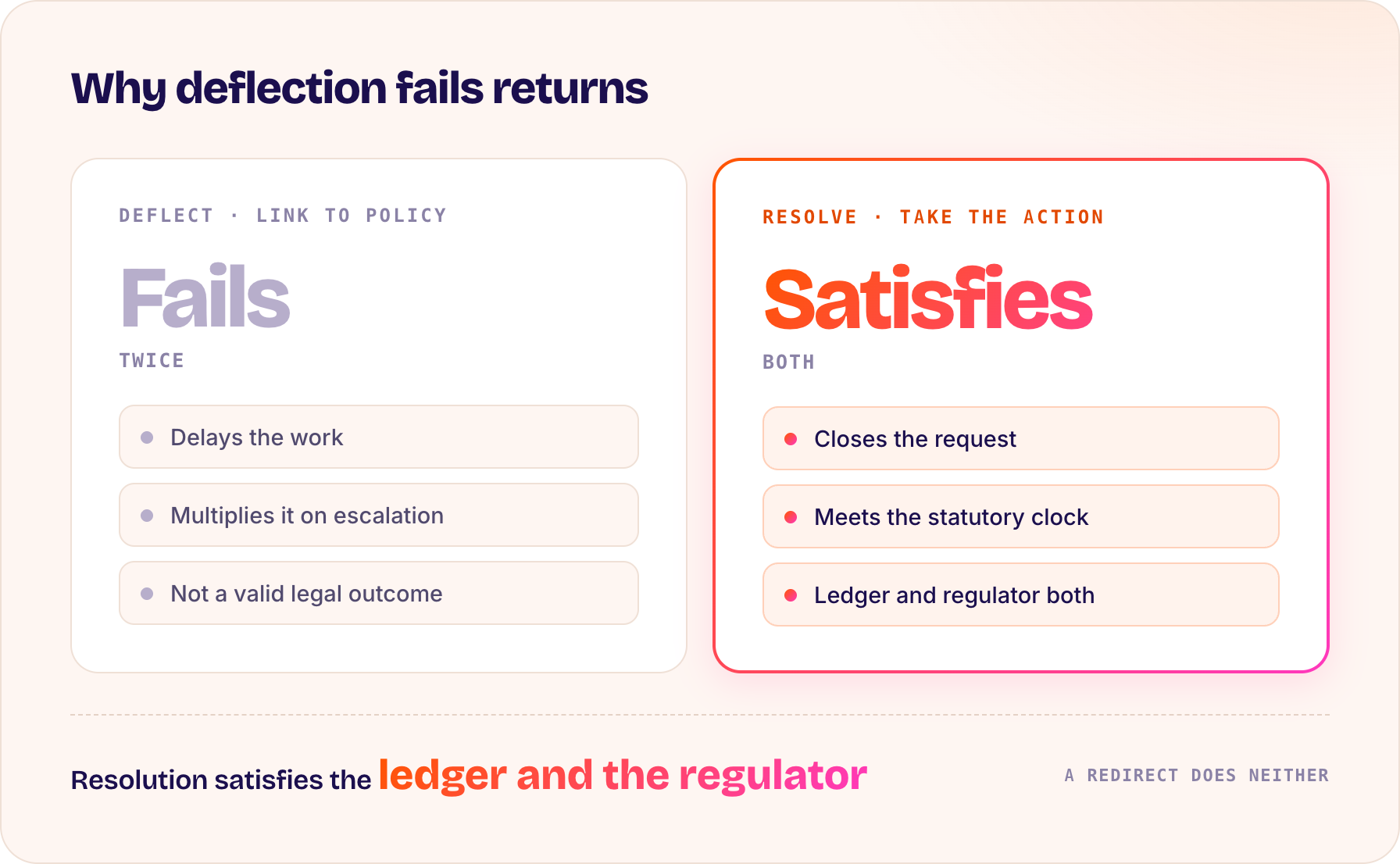
A deflection bot that answers a return request with a link to the policy page fails twice. Financially, it delays the work and often multiplies it when the customer escalates. Legally, in the EU, a redirect is not a valid outcome when the customer has a statutory right and a clock is running. Resolution is the only model that satisfies both the ledger and the regulator.
How to measure returns resolved end to end
Track the percentage of return requests that close end to end, eligibility confirmed, label issued, refund or exchange completed, without a human. That single metric tells you your real automation coverage and, in the EU, your real compliance readiness.
Frequently asked questions
1) How do you automate ecommerce returns?
Connect your returns flow to order data so an AI can confirm eligibility, issue a return label, and trigger a refund or exchange end to end, escalating only genuine exceptions.
2) How much does processing a return cost?
Roughly $25 to $35 all in once you count return shipping, labor, inspection, and restocking, rising at peak season.
3) What is the EU right of withdrawal for online returns?
EU shoppers get 14 days to return an online order with no reason needed and a refund due within 14 days; if the seller fails to disclose the right, the window can extend up to 12 months.
See Evo in action, running on your store
Book a 30-minute walk-through to see how Evo fits on your actual catalog, your support tickets, and your real search queries — and see your real customer graph in action