
Gorgias vs Zendesk (2026): Which One Actually Resolves Tickets?
Gorgias is Shopify-first and fast to set up but sensitive to traffic-spike pricing, while Zendesk scales with deeper reporting but stacks per-seat, add-on, and per-resolution fees.

Gorgias is Shopify-first and fast to set up but sensitive to traffic-spike pricing, while Zendesk scales with deeper reporting but stacks per-seat, add-on, and per-resolution fees. Independent reviews note neither resolves tickets fully end to end by default: both mostly assist human agents rather than act inside your systems.
Gorgias vs Zendesk at a glance
Gorgias is built Shopify-first. It is fast to deploy, deeply tied to the Shopify order object, and comfortable for stores that live inside that ecosystem. Zendesk is the enterprise incumbent: broader channel coverage, deeper reporting, stronger workforce management, and a heavier onboarding.
That is the honest one-line version. The interesting question is not which brand is bigger. It is which one actually closes a ticket.
Pricing models compared
Gorgias prices per billable ticket, then adds an AI Agent fee of about $0.90 to $1.00 per resolution, which can double-bill an automated ticket and spike at peak. Zendesk prices per agent seat (starting around $55 per agent per month), then adds an Advanced AI add-on (around $50 per seat) and a per-resolution fee of roughly $1.50 to $2.00 for automated resolutions.
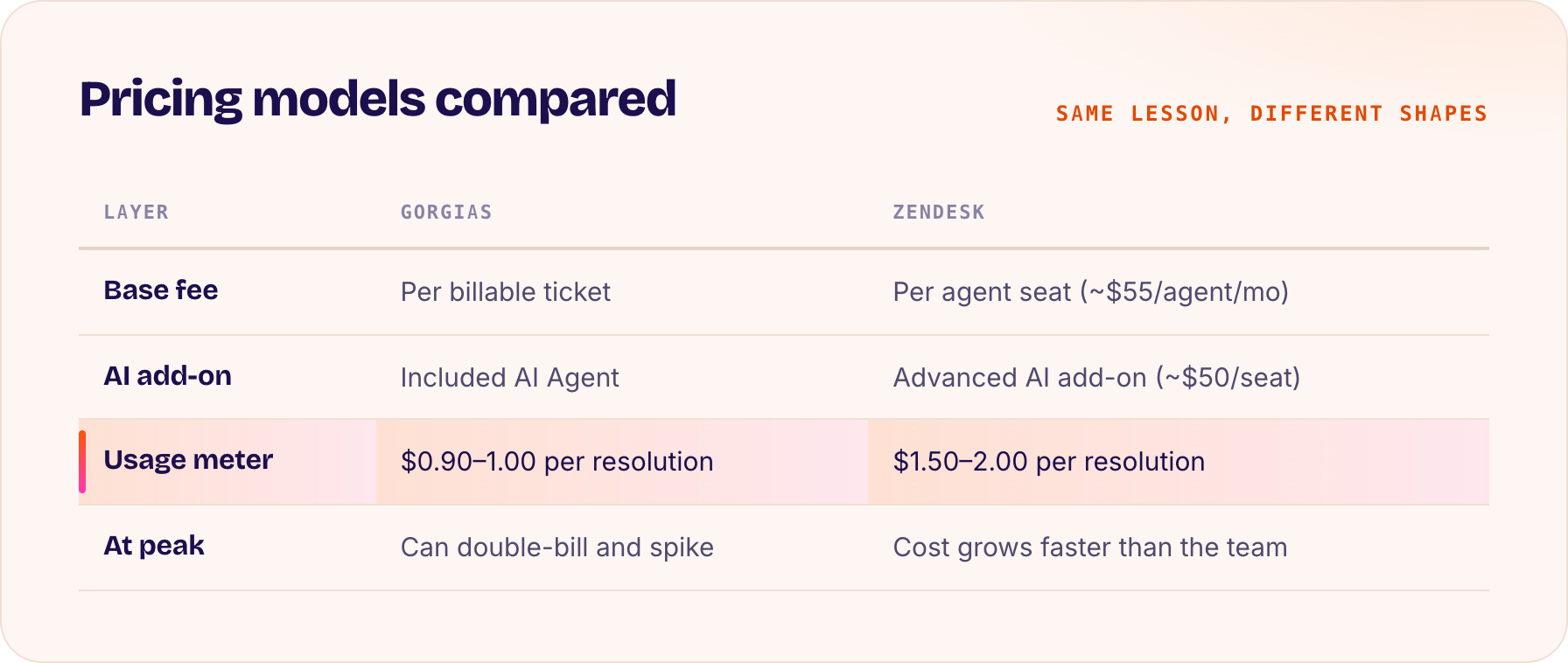
Different shapes, same lesson: both stack a usage meter on top of a base fee, so your cost grows faster than your team. Model both at your peak volume, not the sticker price.
Resolution vs assist: what each does with a ticket
This is where both tools show their age. Independent comparisons note that neither resolves tickets fully end to end by default. They are strong at drafting replies and assisting a human agent, but the actions that actually close a ticket, issuing a refund, changing an address, editing an order, still tend to route to a person.
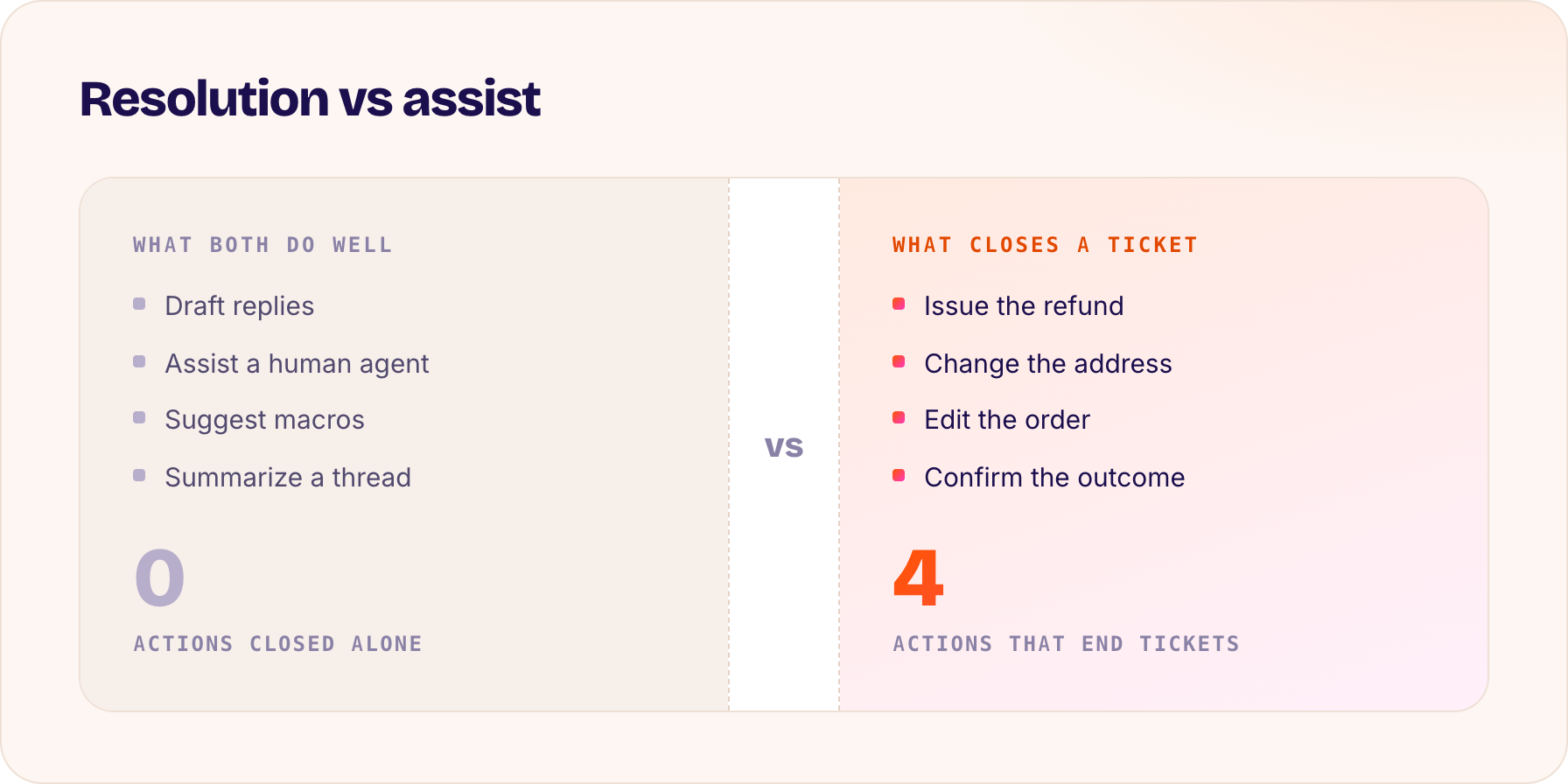
A drafted reply is not a completed action. If your goal is fewer tickets touching a human, assist-grade AI only gets you partway.
Ecommerce fit
For a Shopify-only store that wants quick setup and native order context, Gorgias fits naturally. For a multi-channel or multi-region operation that needs deep reporting and omnichannel routing, Zendesk scales more predictably. Neither, on its own, gives you an agent that resolves the common ecommerce tickets without a human in the loop.
Where both leave a gap
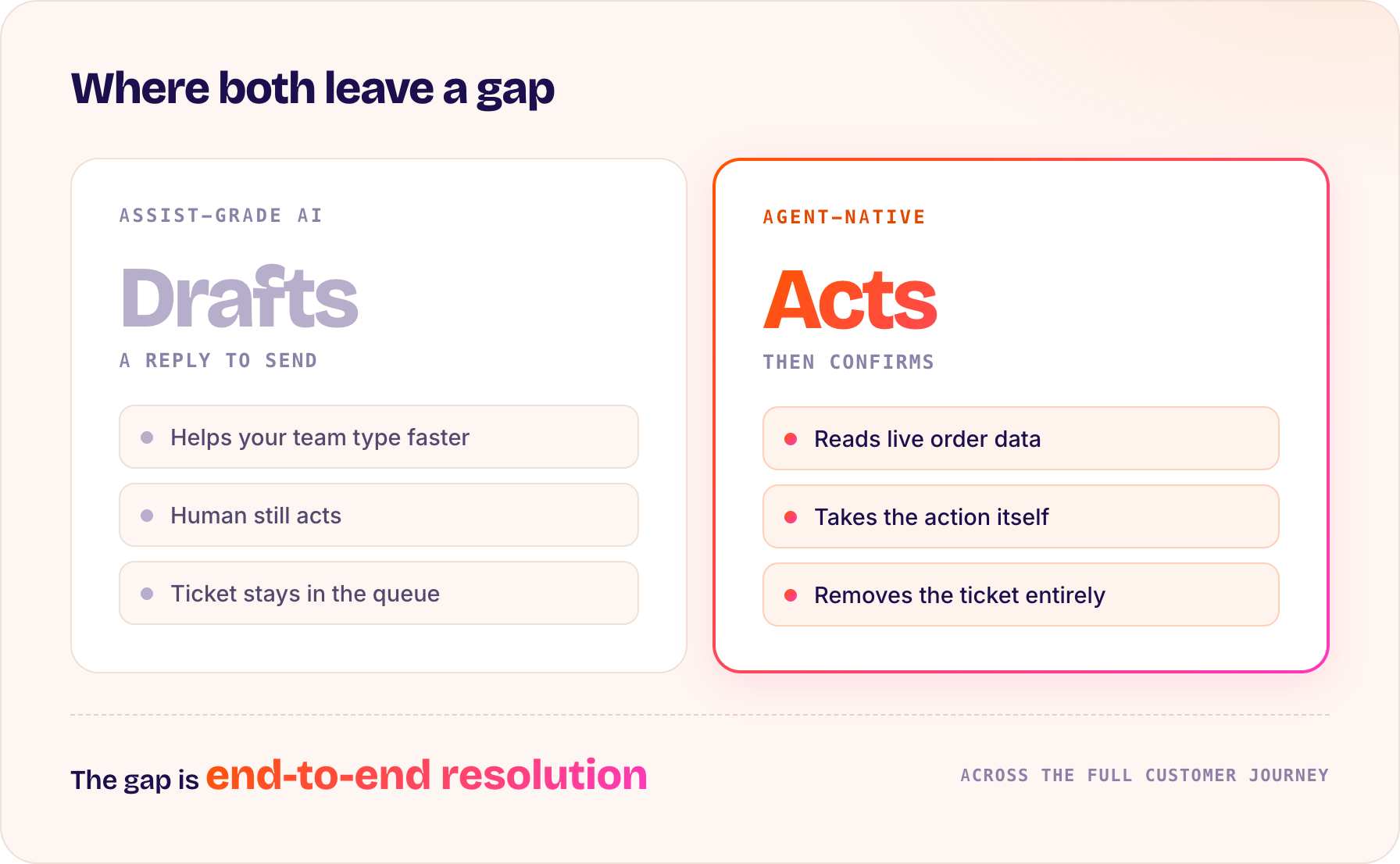
The gap is end-to-end resolution across the full customer journey. An agent-native approach unifies pre-sale and post-purchase, reads live order data, and takes the action itself, then confirms the outcome. That is the difference between a tool that helps your team type faster and one that removes the ticket from the queue entirely.
How to decide: test on your own tickets
Run the same 100 real historical tickets through both, plus any agent-native option you are considering, and count how many close with a confirmed outcome and no human. Then compare that against the true cost per resolved ticket at your peak month. Those two numbers will tell you more than any comparison chart, including this one.

Frequently asked questions
1) Is Gorgias or Zendesk better for ecommerce?
Gorgias is stronger for Shopify-first stores that want fast setup; Zendesk suits larger, multi-channel operations that need deep reporting. Neither resolves end to end by default, so test both on your real tickets.
2) How does Zendesk AI pricing compare to Gorgias?
Zendesk stacks a per-seat fee, an Advanced AI add-on, and about $1.50 to $2.00 per automated resolution, while Gorgias charges per ticket plus about $0.90 to $1.00 per resolution.
3) Do Gorgias and Zendesk resolve tickets automatically?
Both automate a share of tickets, but independent comparisons note they largely assist agents and draft replies rather than take actions like refunds or address changes end to end.
See Evo in action, running on your store
Book a 30-minute walk-through to see how Evo fits on your actual catalog, your support tickets, and your real search queries — and see your real customer graph in action