
How Agentic Commerce Actually Works: A Step-by-Step Walkthrough
You can read a hundred posts on agentic commerce and still not know what actually happens between “the agent decides” and “the order ships.” This is that walkthrough.


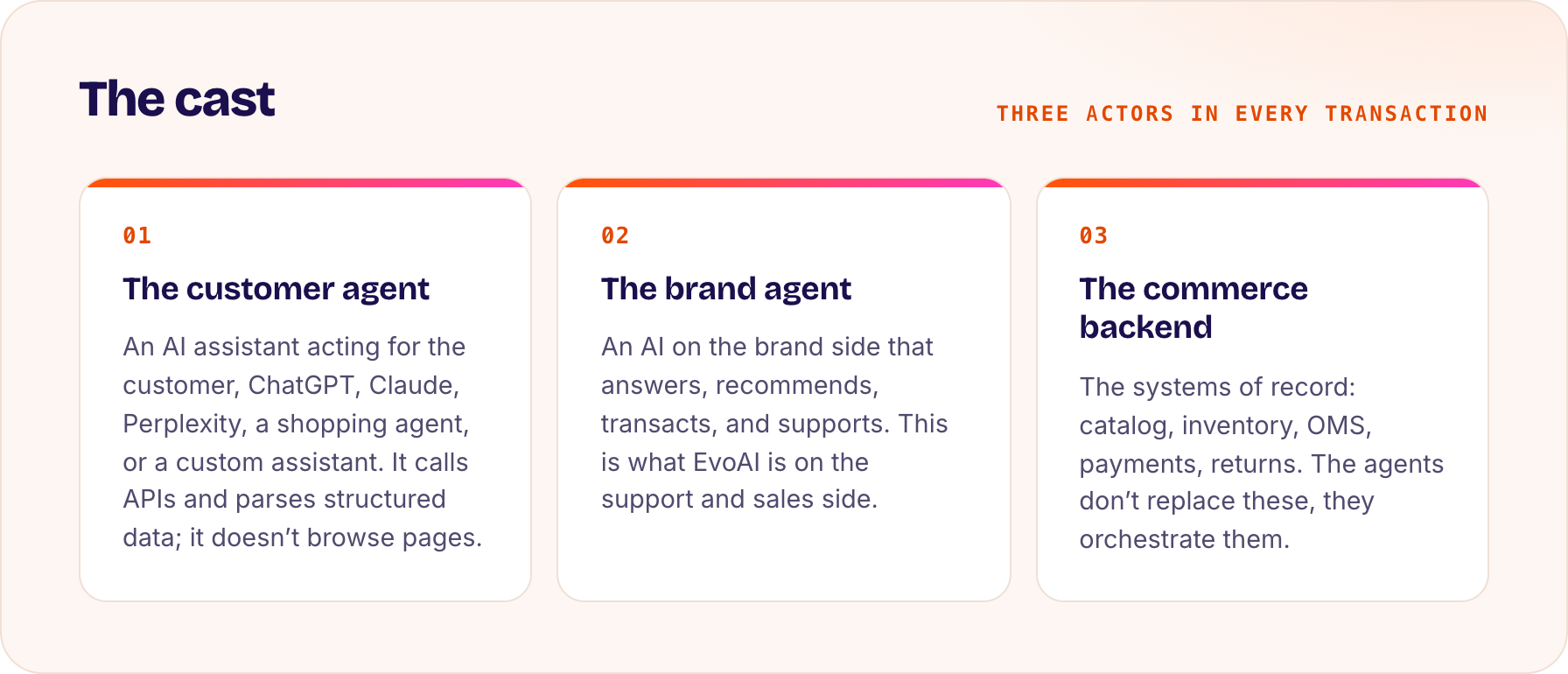
The Cast
Three actors appear in every agentic commerce transaction.
The Walkthrough
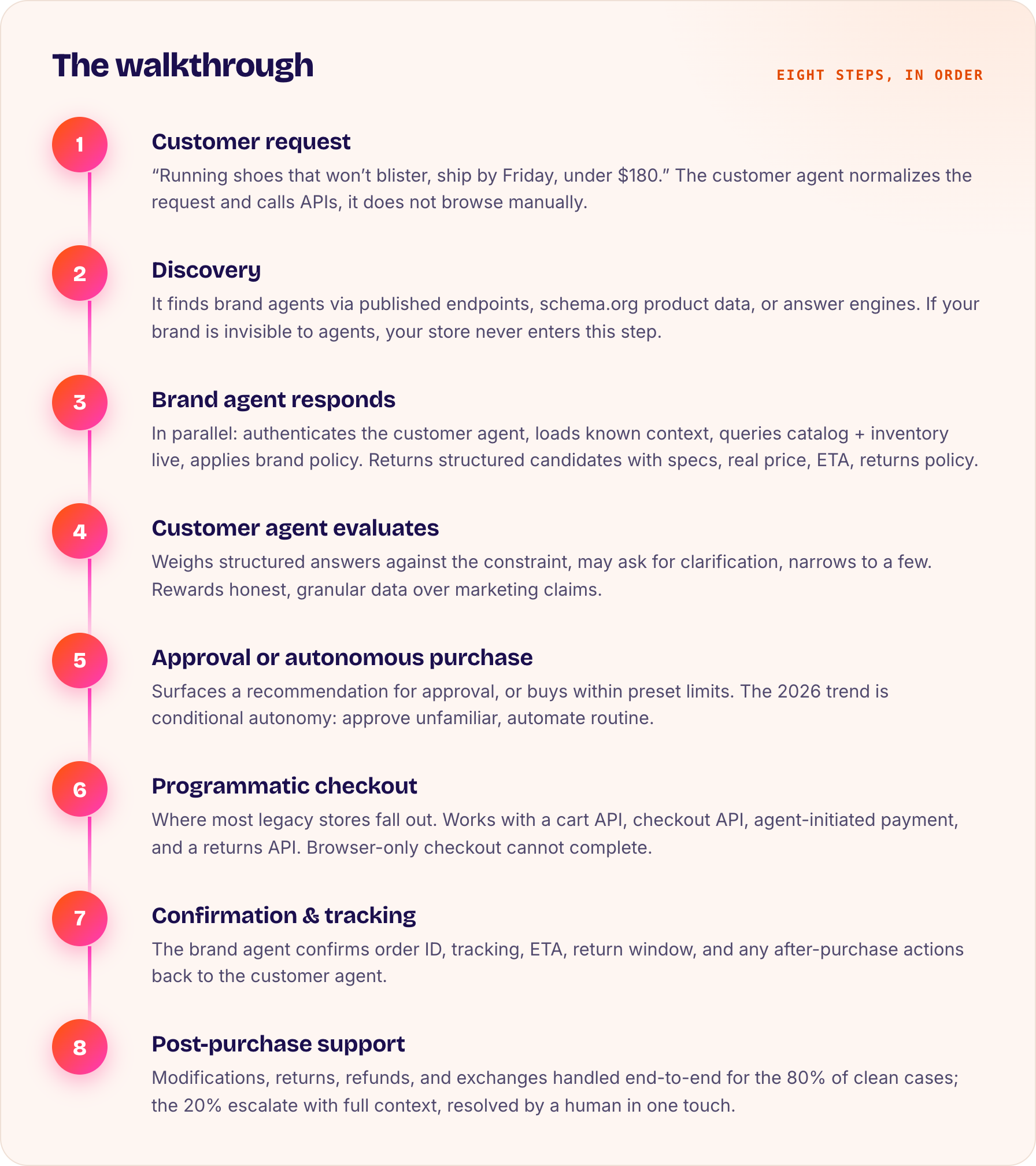
Why discovery is the make-or-break step
The customer agent looks for brand agents through one of three paths: direct agent endpoints brands publish, structured catalog data via schema.org Product markup and feed APIs, or search and answer engines like Perplexity and ChatGPT. If your brand is invisible to agents, your store does not enter this step. This is why agent-readable infrastructure matters more in 2026 than at any prior point in ecommerce.
Why programmatic checkout decides who wins
If your checkout requires a browser, multiple form fills, or human-in-the-loop verification, the agent cannot complete the transaction. What works: a cart API, a checkout API, agent-initiated payment, and a returns or cancellation API. The brands that expose clean checkout APIs win disproportionate agent traffic.
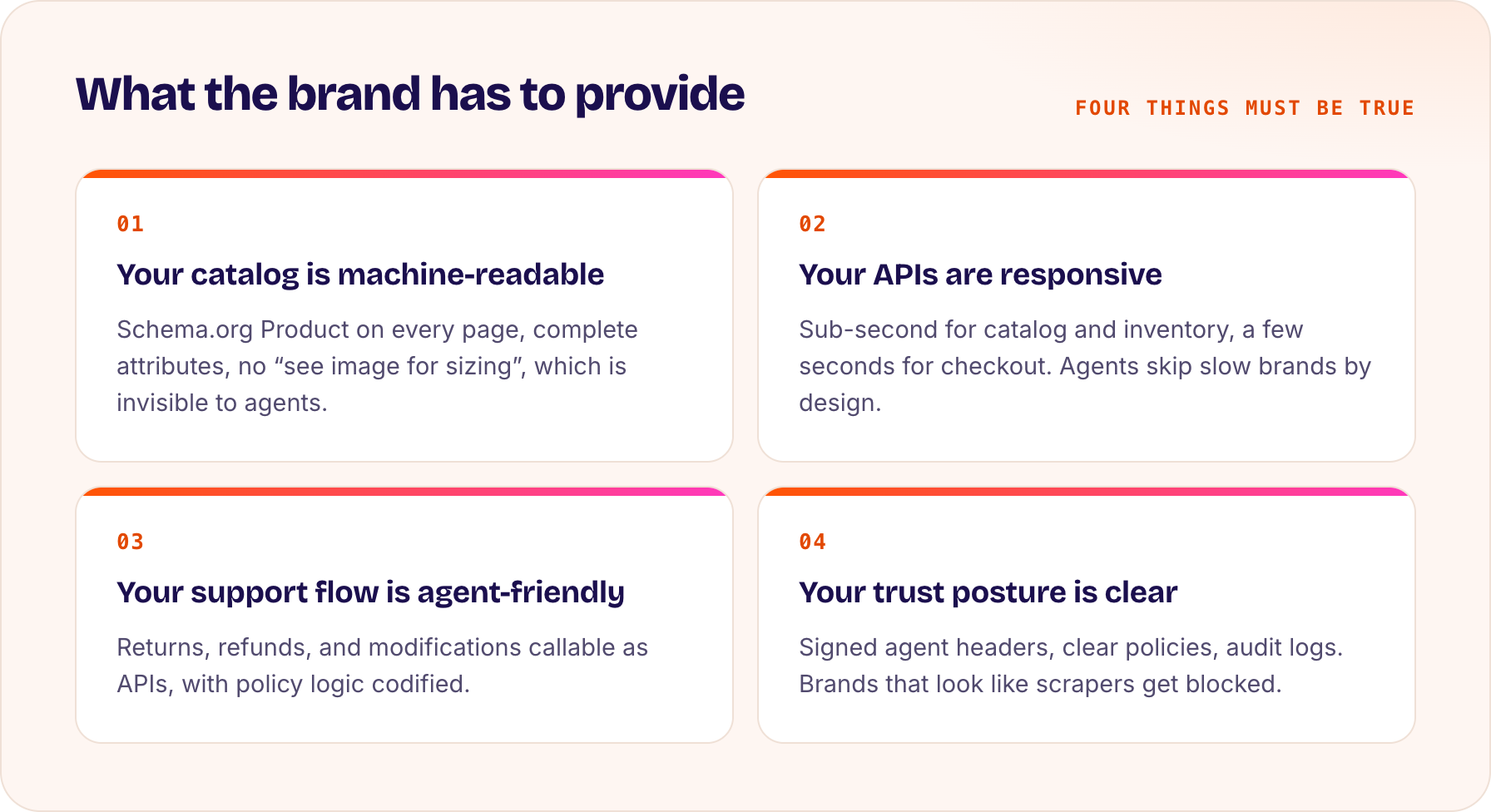
What the Brand Has to Provide
If you want your store to participate in this workflow rather than watch it happen around you, four things have to be true.
What the Brand Should Not Panic About
The web is not disappearing. Browsers are not going away. Plenty of customers will keep clicking through pages and reading reviews. Agentic commerce is a parallel channel, and right now it is small. But it is growing, and the brands that prepare for it will compound. The shift to mobile commerce took ten years; the shift to agentic commerce will not take as long. Early moves are worth more than late ones.
Frequently Asked Questions
1) How does agentic commerce work, step by step?
A customer agent normalizes a request, discovers brand agents, receives structured offers, evaluates them, then buys (with or without approval) via programmatic checkout. The brand agent handles confirmation and post-purchase support.
2) What does a brand need to participate in agentic commerce?
Machine-readable product data, responsive catalog and checkout APIs, agent-friendly returns and modification APIs, and trusted agent authentication.
3) Do shopping agents browse websites like humans?
No. They call APIs and parse structured data (schema.org markup, feeds) rather than rendering and clicking through pages, which is why agent-readable infrastructure is essential.
4) What is the Agentic Commerce Protocol?
An emerging standard for how agents and merchants exchange catalog data, initiate payments, and authenticate, so brands can support agent traffic without rebuilding their stack.
See Evo in action, running on your store
Book a 30-minute walk-through to see how Evo fits on your actual catalog, your support tickets, and your real search queries — and see your real customer graph in action